How are you doing
One word was all it took to turn a boss’s weekend demand upside down. Before that final jab, a bathroom exchange, a bachelor’s boast, and a little girl’s innocent question each set someone up for a spectacular fall.
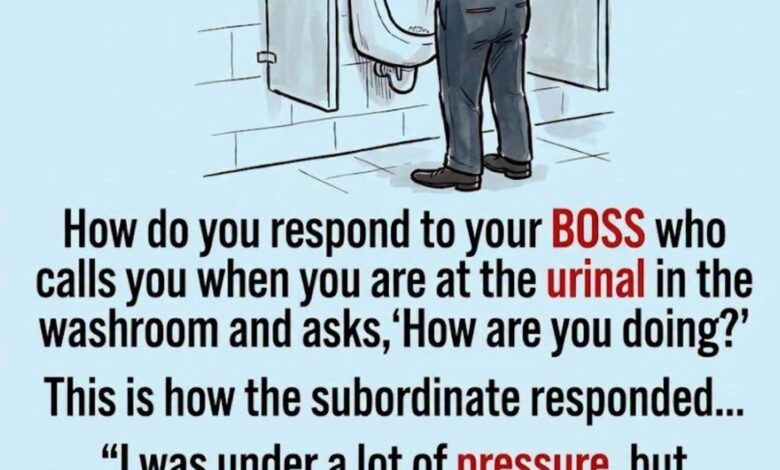
An employee fielding a friendly question at the urinal answered as though he were delivering a business update: pressure had been high, but things were flowing, output was healthy, and he would soon wash his hands of the matter. Meanwhile, a man at a bar proudly claimed total authority over cooking, laundry, and dishes. The explanation was less impressive than the announcement: he lived alone. Both jokes turned ordinary conversation into a perfectly timed little performance.
At the dinner table, a father enjoyed a brief moment of glory when his daughter asked whether he was the family boss. His enthusiastic confirmation prompted her follow-up: had Mommy put him in charge? Then came the employee asked to work Saturday. He agreed but cautioned that weekend public transport would delay his arrival. When his boss asked what time to expect him, the answer was “Monday.” No argument required—just one beautifully inconvenient word.
Each exchange begins with a question that sounds ordinary. The humor arrives when the answer follows a different logic from the one the listener expects. At the urinal, the employee hears a chance to turn a personal question into a performance of office language. Pressure, flow, and output all have a place in a workplace report. In that setting, they acquire another meaning without the speaker needing to explain the joke.
The bachelor at the bar uses a different kind of misdirection. His boast sounds like a claim that he has won every domestic argument. Naming cooking, washing, and dishes gives the impression of a household arranged entirely to his advantage. The admission that he lives alone changes the meaning of everything that came before it. He has total authority because there is nobody else to consult, and all the work is still his.
At dinner, the child’s question gives her father a chance to enjoy being called the boss. He accepts the title before discovering what she means by it. Her follow-up treats authority as something her mother can assign. The father’s confident answer becomes the setup for the line that follows. The child does not have to argue with him; she simply asks a question that places his claim in a smaller frame.
The Saturday exchange depends on the same patience. The employee first appears to agree with the demand to work on the weekend. Mentioning public transport sounds like a practical concern that the boss might be willing to accommodate. Only when the boss asks for an arrival time does the employee reveal how far that accommodation would have to stretch. Monday turns an agreement into a refusal without changing the polite structure of the conversation.
The jokes work well together because the people who sound most certain at the beginning do not control the ending. A boast, a title, and a scheduling request each leave room for another person’s interpretation. The final reply uses that room. It is brief enough to make the listener revisit the setup and hear the earlier words differently.
There is no elaborate explanation inside the exchanges themselves. The office phrases, the empty household, the mother’s imagined permission, and the delayed bus each give the audience enough to make the connection. The pleasure comes from reaching that connection a beat after the speaker does. A familiar conversation briefly becomes a contest over meaning, and the last word settles it.